Case Study · AI Software Studio · Build + Enable
41 apps built. 10+ dev teams enabled.
Your developers already have Claude. They already know they can build anything — they’re doing it right now, faster than review, security, and architecture can keep up. What they need isn’t inspiration. It’s guidance, safety, and oversight — from a practice that ships with these tools every day: 41 apps built, 10+ development teams enabled, velocity up for every one of them.
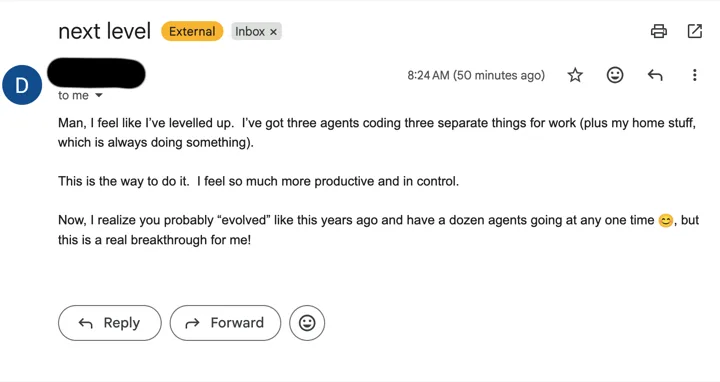
“Man, I feel like I’ve levelled up. I’ve got three agents coding three separate things for work (plus my home stuff, which is always doing something). This is the way to do it. I feel so much more productive and in control… this is a real breakthrough for me!”
The situation
Your developers just got Claude.
Somewhere in your company an internal champion put AI on the team’s desks — and it worked. Within a month the whole team is building everything under the sun, faster than review, security, and architecture can keep up. The enthusiasm is the asset. Unmanaged, it’s also the exposure: unreviewed generated code heading for production, sensitive context leaving the building, architecture decisions delegated to a model nobody’s verifying.
Your team doesn’t need to be told what’s possible — they’re living it. What they need is guidance on where AI belongs in the system, safety in how it gets used, and oversight that proves it’s working. That’s this practice. We’ve run it for 10+ software and product companies, since before agents existed.
What we install
Guidance. Safety. Oversight.
Guidance — fit AI to the team, not the team to AI
We start from your team’s own cadence — AI goes into the sprint, not the sprint around AI — and we work with the architects, not just the coders. The riskiest AI decisions aren’t in the diffs; they’re in the designs. Knowing where AI belongs in a system — and where it doesn’t yet — is most of the job.
Safety — habits, not memos
Human review before generated code merges. Clear rules for what context can and cannot leave the building. Verification as a first-class step, not an afterthought. The habits are simple; the work is making them team habits instead of individual virtues.
✓ No incidents traced to installed practicesOversight — a scoreboard everyone already trusts
Baseline captured before AI touches anything, then adoption measured the way agile teams already measure themselves: velocity. It rose for every single team — and because the baseline came first, nobody has to take that on faith.
✓ Baseline first, alwaysAnd it’s written down
What we kept teaching team after team, we published: the AI Manifesto. In the agent era the same discipline continues as skill security and agent governance — read what we hold ourselves to before you hire us.
✓ Published · freeWhat mature looks like
The endgame: your own champion, teaching.
The engagement is working when we’re no longer the ones presenting. At one current client, a few months in, their own senior engineer ran the AI dev-practices session for the whole team — our written guidance, contextualized to their systems, in his voice, on his slides. That’s the durability you’re buying: adoption that doesn’t depend on us being in the room.
What that team now teaches itself:
The recipe
We train the human to train the AI.
How does a whole company get there — not just the engineers? The ladder is the same every time. This is it verbatim, as we wrote it to a client CTO mid-engagement:
Dashboards create personalization and familiarity
Everyone’s first build is a dashboard of their own work. It’s not the point — it’s the fastest door to step 2. Get each person to step 2, and you win.
Familiarity creates the ability to abstract routines
Once the tool feels personal, people start seeing their own week as routines that can be written down — the skill that unlocks everything after it.
Routines given to AI create speed, fun, and learning
Hand a written routine to an agent and the loop starts feeding itself: faster results, more curiosity, more routines.
Learning creates application to the work itself
Increase speed. Reduce cost. Increase revenue. The engineer quoted at the top of this page lives here — three agents running in parallel, on real work.
And it happens one person at a time, without rushing — rushing ruins it. Every function has its own curve: HR and accounting move fast once past the learning curve, sales is slow then fast, operations is always slow, then fast. No penalties. Time.
Why listen to us
Because we ship, too.
This isn’t advice from the sidelines. 41 apps built with AI — 11 commercial, all under NDA, several in production; 30+ personal, many born at our live workshop’s open-build floor. Thirty days each, a working build every week, revisions in writing. Every practice on this page runs in our own production systems first.
Need the app built rather than the team enabled? Same practice, same cadence — and honest platform advice up front: most “apps” ship best as mobile web apps, PWAs, or Chrome extensions. We build native when the product demands it, and say so when it doesn’t.
The operating thesis
Make more cheap code.
From Peter’s workbook: what the economics of code look like once agents generate it — and how carefully code gets read before it merges, from throwaway experiments to “people could die.”
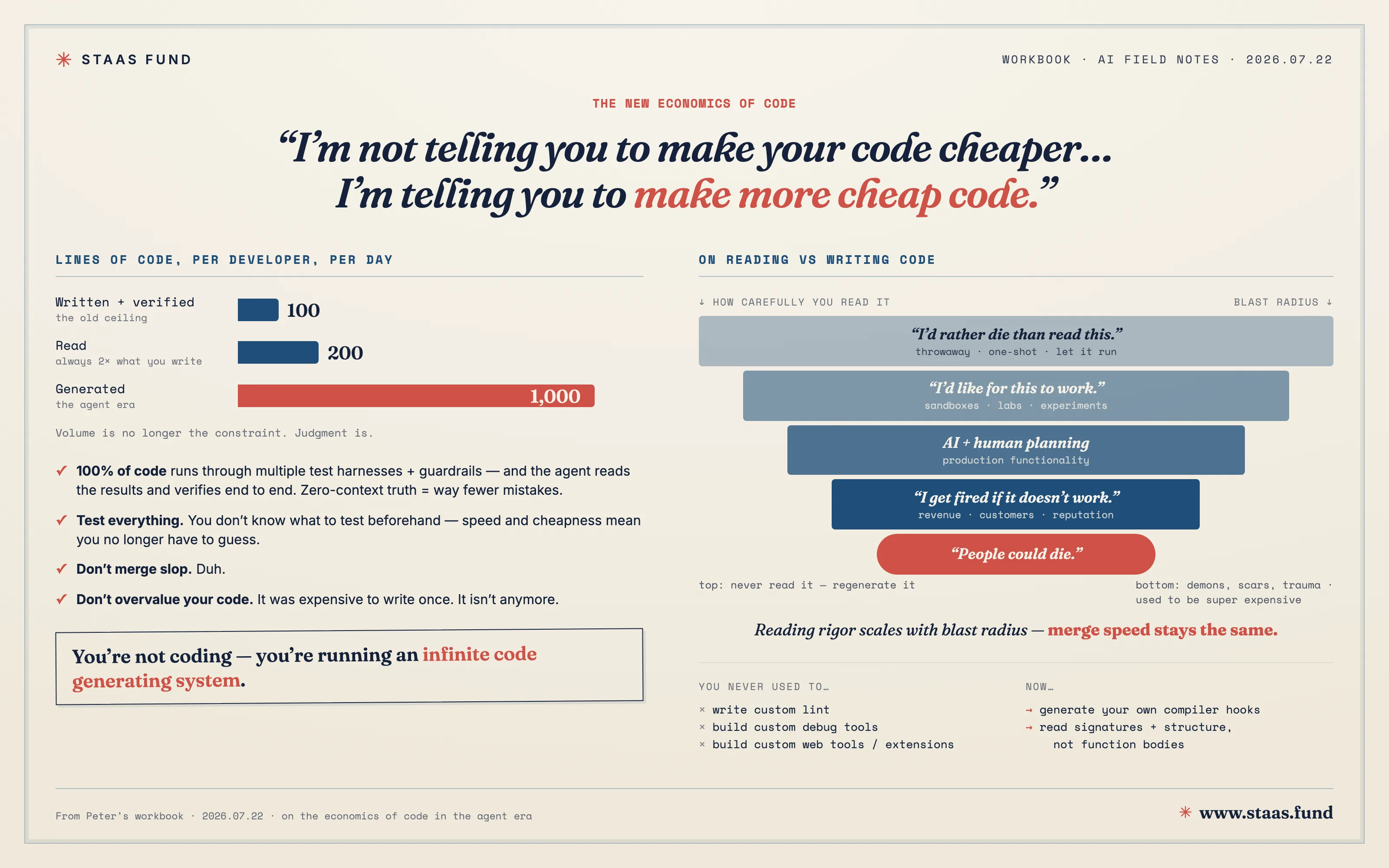
Working numbers from our own practice, not industry benchmarks — click to view full size.
The discipline
The engineering system behind both sides.
None of this runs on vibes. Every build and every enablement ships the same operating system — rules we run on our own production systems daily, written the hard way, and installed into every client team we touch.
The 30-day build cadence
A working version every week, revisions in writing every week. Momentum plus a paper trail — no big reveal in week four.
Nothing merges unreviewed
Definition of done — 3 layers
A feature is done when its verification command runs green — the system records the evidence; nobody self-declares.
These aren’t aspirations — they’re the standing rules of our own production systems, and the operating system every enabled team leaves with.
What we can claim
Honest numbers, both sides.
Straight talk: the enablement practice largely predates agents — and predates our habit of banking dollar figures. We won’t retrofit revenue claims onto engagements that didn’t track them. What was measured rigorously was velocity against a captured baseline — and on the build side, shipped software on a written cadence.
Why it works
Adopt fast, verify always
We never slow the enthusiasm down — we give it a verifier. Generated code merges when a human has read it.
Honest platform, honest metric
PWA or native, we recommend what serves the product. Velocity or shipped software, we claim only what was measured.
Whole systems, not screens
Data model, workflow, legal posture where it matters. An app is the visible tip of a system that has to hold up.
Weekly, written, working
A working build every week and revisions in writing — on both sides of the practice. Momentum plus a paper trail.
What you get
What a software enablement ships — a practice installed, not a pep talk.
- Velocity baselines captured per team — before anything changes, so lift is provable
- The harness — CLAUDE.md rules, review pipelines, and dispatch discipline installed in your repos
- The 8 practices, coached in the work — on your real backlog, not a slide deck
- An eval + Definition-of-Done stack — AI-written code earns its way to main
- The 30-day build cadence — with weekly written revision rounds
- Handoff with teeth — your leads run the practice; we audit on a cadence
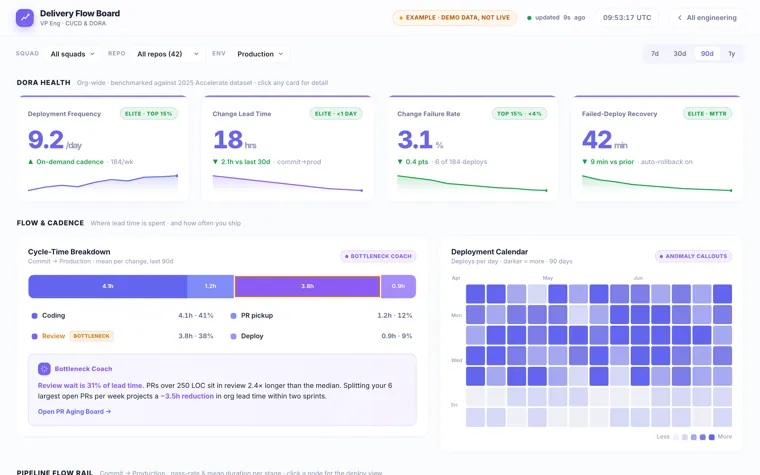
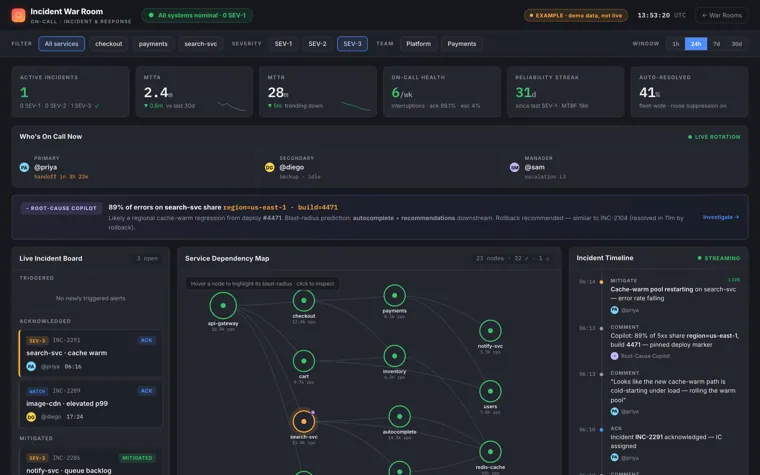
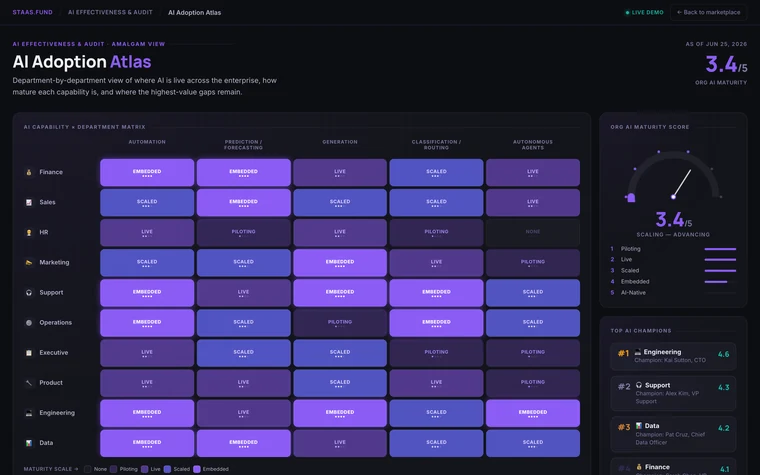
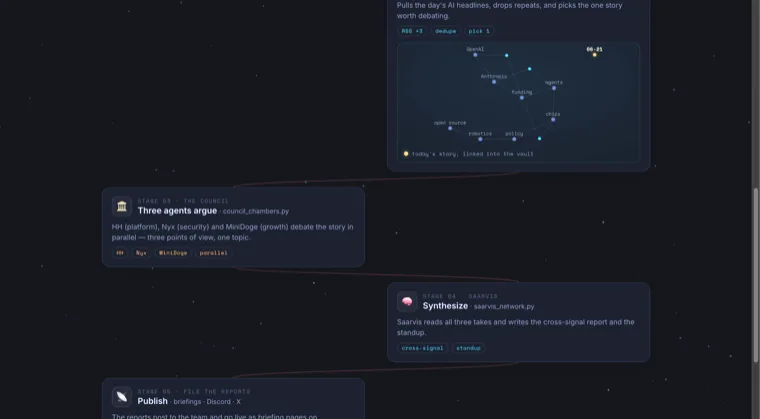
Representative artifacts — a real process review, our own production pipeline, dashboards from our 44-dashboard marketplace. Client identifiers removed. Your versions get built on your systems.
See where you stand
What could AI actually do for your team? Match real capabilities to real work.
Your architects just got Claude…
…and they want to build everything under the sun. Good — that energy is the whole opportunity. Whether you need software built or a team enabled to build it safely, that’s this practice. And if it’s the personal app you’ve always wanted: come build v0.1 yourself at the Builder’s Table.
Start a conversation → Build it yourself, live →